Rethinking Everyday Architecture: Rediscovering Forgotten Potentials
- Rana Pratap

- Oct 16, 2025
- 2 min read
Exploring under-appreciated elements—parametric skins, biophilic stairwells, dormant water tanks, kinetic facades—can spark fresh design dialogues and elevate both user experience and digital visibility.
1. Parametric Facades as Living Skins
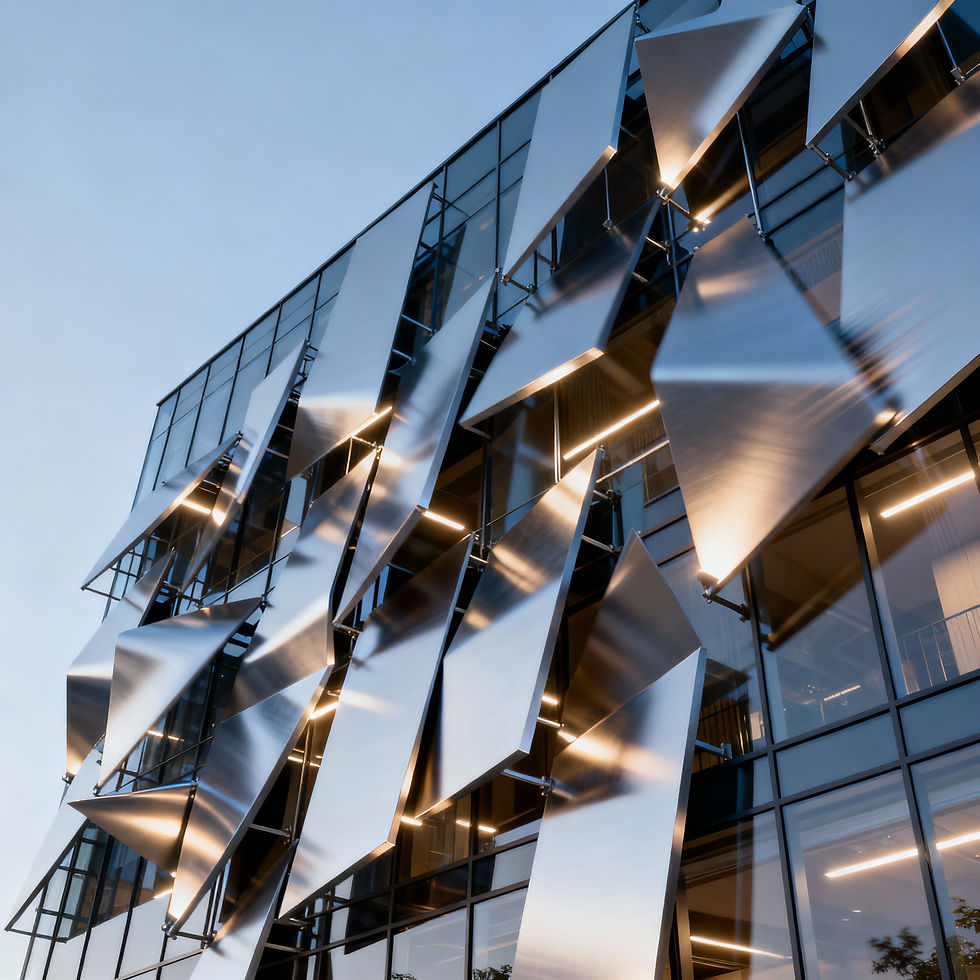
Most architects view parametric design as purely aesthetic. Instead, consider treating your façade as a living skin—one that adapts to environmental data, seasonal shifts, or user behavior. By embedding sensors and actuators, your parametric envelope can breathe, adjust porosity, and modulate light dynamically. This transforms passive envelopes into responsive interfaces, surprising occupants with evolving patterns and fostering deeper connections to the building’s context.

2. Biophilic Stairwells: Beyond Green Walls
Vertical circulation is often an afterthought. Integrate staircases with biophilic strategies beyond mere potted plants. Imagine stratified greenery—moss mats on risers, fern fronds tracing the handrails, and micro-terrariums suspended mid-flight. Such immersive stairwells not only improve air quality and acoustics but also turn a mundane journey into a restorative moment, encouraging users to choose stairs over elevators.

3. Unearthing Forgotten Water Tanks
Cityscapes are dotted with obsolete water tanks—often neglected relics. These cylindrical giants can be reborn as vibrant community hubs: pop-up galleries, meditation pods, or vertical orchards. When adaptive reuse taps into local narratives (e.g., inscribing tribal murals or harvesting rainwater for urban gardens), these tanks resonate culturally, weaving heritage into contemporary social architecture.

4. Kinetic Facades: Architecture in Motion
Shading systems usually rely on static louvers or fixed screens. But kinetic façades—driven by wind, sunlight, or user input—introduce choreography to building exteriors. Panels that pivot at dawn, ripple under a breeze, or realign based on occupancy data create visual theatre and energy savings. Such motion can become a new architectural language that attracts social media engagement and press coverage alike.


Comments