AI Computational Design and Parametric Architecture
- Ansh Brahma

- Jul 3, 2025
- 4 min read
Updated: Jul 19, 2025
Parametric and computational design represent transformative approaches in architecture and engineering, leveraging algorithms, parameters, and data-driven processes to optimize creativity, efficiency, and sustainability. These methodologies enable dynamic modeling, where adjustments automatically propagate through interconnected design elements, fostering innovation in complex projects. Below is a detailed exploration of these concepts, their applications, and relevant case studies.
Core Principles of Parametric and Computational Design
Parametric design uses predefined rules and parameters (e.g., dimensions, geometric relationships) to generate and control design outcomes. For example:
Adjusting a single parameter (like beam length) triggers automatic updates across the entire model.
It replaces manual modeling with algorithmic logic, enabling efficient handling of repetitive elements.
Computational design expands this by integrating data analysis, simulations, and algorithms to solve design challenges:
It processes variables like environmental data (sunlight, wind) to optimize sustainability and functionality.
Tools like visual programming (e.g., Grasshopper for Rhino) allow non-coders to create complex parametric systems.
Applications Across Industries
Architecture:
Generates adaptable structures with real-time modifications (e.g., facades optimized for light and ventilation).
Enhances sustainability through energy consumption simulations and material efficiency.
Industrial Design:
Creates precise 3D models for machinery, consumer products, and medical devices.
Supports manufacturability checks and performance simulations.
Automotive/Aerospace:
Develops aerodynamically efficient components via parametric surface modeling.
Urban Planning:
Simulates traffic flow or population density using computational algorithms.
Benefits
Efficiency: Rapid iteration reduces design time by automating calculations.
Precision: Algorithmic rules minimize human error in measurements.
Sustainability: Data-informed decisions lower energy use and carbon footprints.
Customization: Parameters adapt designs to site-specific needs (e.g., terrain-responsive buildings).
Case Studies:
Santiago Calatrava’s Structures: Use parametric rules to create organic, load-optimized forms.
Zaha Hadid’s Heydar Aliyev Center: Features computationally generated fluid geometries for aesthetic and functional harmony.
AAA Architects: Research Facility 2025
Architectural Project Case Study: AAA’s Research Facility for AI Behaviour Recognition and Emotional Quotient
Location: Undisclosed, India
Architect: AAA Architects, Jaipur, India
Typology: Research and Innovation Facility

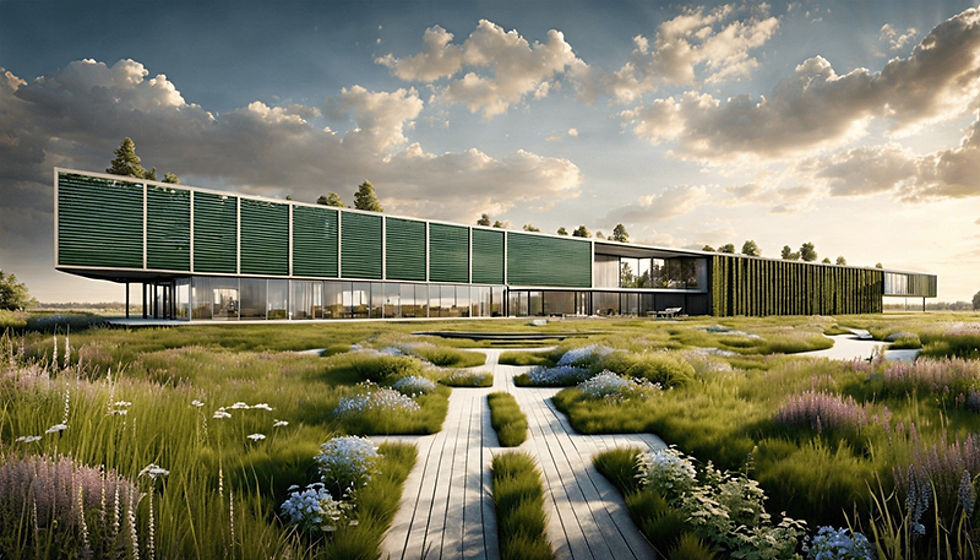
AAA’s Research Facility is a cutting-edge institution dedicated to the research and development of artificial intelligence systems focused on behavior recognition and emotional intelligence (EQ). Conceived as an iconic node in the broader discourse of AI-human interaction, the design combines parametric form-finding with ecologically responsive strategies. The project is a signature work of AAA Architects, known for their contextual yet futuristic design language that blends technology and architecture seamlessly.
Architectural Concept
At its core, the facility serves as a convergence point for scientific exploration and humane design. The architecture reflects the duality of artificial systems and natural intelligence through:
Parametric Forms: The façade and roofline evolve from generative algorithms inspired by neural networks and emotional resonance graphs. Fluid forms mimic cognitive mapping processes, creating an exterior that seems both technical and organic.
Emotive Architecture: The building explores how architecture can respond to human emotions. Spaces vary in scale, light, material, and enclosure based on programmed emotional “zones” – from focused and intense lab spaces to calm meditative courtyards.
Design Features
Biomorphic Roof Structure: Inspired by the brain’s synaptic network, the expansive undulating roof allows for filtered natural light. This not only reduces dependence on artificial lighting but also creates a psychological uplift, enhancing user well-being.
Skin-responsive Façade: The outer skin uses a dynamic lattice derived through computational modeling, serving both aesthetic and climatic purposes. It filters sunlight based on solar orientation and changes in interior usage patterns.
Nature-Integrated Planning: Lush native vegetation merges with the built form, encouraging biodiversity. A meandering waterbody surrounding the structure serves both microclimatic regulation and symbolic reflection of AI’s continuous learning loop.
Functionality and Program
The research centre is divided into three zones:
1. Neuro-Labs: Enclosed, acoustically treated spaces for machine learning training, cognitive behavior experiments, and real-time emotion mapping.
2. Sensory Simulation Wing: Immersive rooms equipped with sensors and AR environments for AI behavior prediction in social scenarios.
3. Ethics & Humanity Block: A contemplative area featuring lecture rooms, ethical testing chambers, and interaction zones designed for critical dialogues between AI and psychology researchers.

Materials & Sustainability
Primary Structure: Concrete and steel framework with CLT (cross-laminated timber) inserts in interior zones.
Façade Materials: Aluminium mesh cladding, terracotta fins, and perforated GRC panels.
Sustainable Systems:
Passive cooling via stack effect.
Rainwater harvesting and water recycling.
Solar-integrated skin.
Indoor air quality regulation through plant-assisted filtration systems.
Symbolism & Aesthetics
The entire facility is symbolic of the interplay between cognition and compassion, analytics and empathy. The form speaks of a future where artificial systems are shaped not only by logic but also by emotion — a truly humanizing vision of AI.
Impact & Future Potential
AAA’s Research Facility stands as a pioneering example of how architecture can be an enabler of humane technology. Its integration of parametric design, sustainable thinking, and contextual aesthetics makes it a benchmark for AI research infrastructure across India and beyond.
These methods enable architects to balance tradition with innovation, as seen in culturally significant projects worldwide.
Software Primary Use:
Rhino + Grasshopper (Parametric modeling via visual scripting; ideal for complex geometry)
Revit + Dynamo (BIM-integrated parametric design for automated documentation)
ArchiCAD (Streamlines dynamic model updates across architectural elements)
Future Outlook
Parametric and computational design are reshaping architecture through AI-driven generative design and real-time environmental analysis, promising smarter, more resilient built environments. As these tools evolve, they democratize advanced design capabilities, empowering smaller firms to tackle ambitious projects.


Comments