National Guidelines for Sustainable Data Center Development in India

Updated: May 4
A Policy Framework for Noise Mitigation, Climate Adaptation, and Circular Resource Use in India's Data Centre Sector
India’s data centre sector is expanding rapidly across Mumbai, Hyderabad, Chennai, Bengaluru, and emerging hubs. To ensure this growth supports rather than strains urban and industrial ecosystems, these guidelines promote proactive urban design, acoustic harmony, and circular economy principles.

1. Zoning and Urban Integration
Classifying large-scale data centres as heavy industrial facilities is essential. It is imperative to enforce a minimum 500-metre setback from residential or mixed-use zones. This setback should be supported by a 100-metre wide green buffer of native tropical vegetation and earth berms. Such measures prevent low-frequency noise propagation while enhancing biodiversity and providing visual screening.
Annotated Sustainable Campus Layout

2. Acoustic and Operational Design Standards
To mitigate noise pollution effectively, the following standards should be implemented:
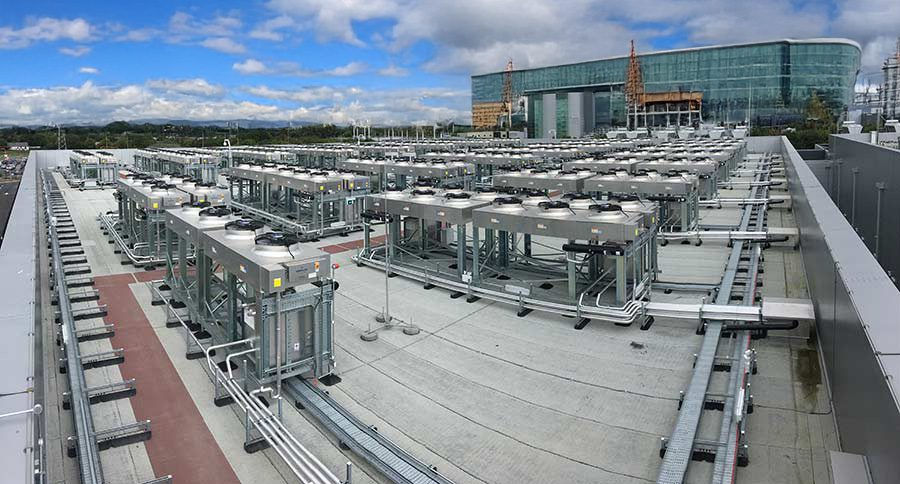
Install 8–10 metre high sound-absorbing barriers around all cooling towers, chillers, and generators.
Mandate fully enclosed equipment yards equipped with silencers, vibration isolators, and low-velocity fans.
Set strict noise limits: 55 dB during the daytime and 45 dB at nighttime at the site boundary, aligning with residential ambient standards.
3. Sustainable Materials and Circular Construction
Prioritising low-carbon, locally sourced materials is crucial for reducing embodied carbon emissions. Recommended materials include:
Green concrete incorporating fly ash, slag, or calcined clay, which can result in up to 70% lower emissions.
Recycled steel sourced from electric arc furnaces and reclaimed aluminium.
Modular construction techniques that allow for future adaptability and material recovery at the end of a building's life cycle.
Adopting circular economy principles is essential. This includes designing for disassembly, tracking material passports, and targeting at least 50% recycled content in non-critical building elements.
4. Resource Circularity – Transforming By-Products into Urban Assets
Data centres consume water, generate significant low-grade heat, and produce noise — all of which can be redirected as valuable resources.
Waste Heat Recovery
Capturing server heat, typically ranging from 25–40°C, via heat exchangers and heat pumps can supply district heating for nearby industrial processes, greenhouses, swimming pools, or commercial buildings. In India’s industrial corridors, this can support textile drying, food processing, or pharmaceutical units, effectively turning “waste” into productive energy and reducing fossil fuel dependence.
Water Reuse
Implementing closed-loop and multi-stage recycling systems using treated wastewater and rainwater harvesting is vital. The goal should be to achieve near-zero freshwater withdrawal, particularly in water-stressed regions.
Noise as a Design Opportunity
While primarily mitigated, residual low-frequency sound can inform site planning. This involves orienting noisy equipment away from sensitive zones and using sound to define buffer transitions.
Heat Recovery and Circular Flow Diagram

Implementation Roadmap
To ensure the successful application of these guidelines, the following steps should be taken:
Require detailed acoustic modelling, lifecycle assessment, and heat recovery feasibility studies during the planning stage.
Offer incentives for projects achieving a Power Usage Effectiveness (PUE) below 1.4, a minimum of 30% waste heat utilisation, and verified noise compliance.
Integrate these standards into state industrial policies and environmental clearances for seamless adoption.
By embedding these principles from the conceptual stage, India can position its data centre infrastructure as a model of sustainable urban-industrial synergy. This approach will deliver digital growth while enhancing local resource efficiency and community well-being.
Conclusion
In conclusion, the framework presented herein serves as a comprehensive guide for policymakers, urban planners, developers, and architects. By adhering to these guidelines, stakeholders can contribute to a more sustainable future for India's data centre sector, ensuring that it not only meets the demands of a digital economy but also aligns with environmental and social responsibilities.
This document is designed as a ready reference for all involved in the planning and development of data centres, ensuring that they are equipped with the necessary tools and knowledge to implement these vital strategies effectively.
Comments